Thanks, flowerpowermom, for a great post on Ready, women & activist policymaking: Why We’re Ready for Change.

FPM-Flower-Girl


Thanks, flowerpowermom, for a great post on Ready, women & activist policymaking: Why We’re Ready for Change.
FPM-Flower-Girl
Led by reports of zero US job growth in August, in a national context of big pushes to roll back workers’ bargaining rights, this Labor Day is signifying hard.
So much to say, so much of it deeply irritating, I’m celebrating the holiday with a trio of local Houston labor heroines.
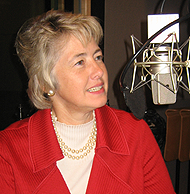
Houston Mayor Annise Parker
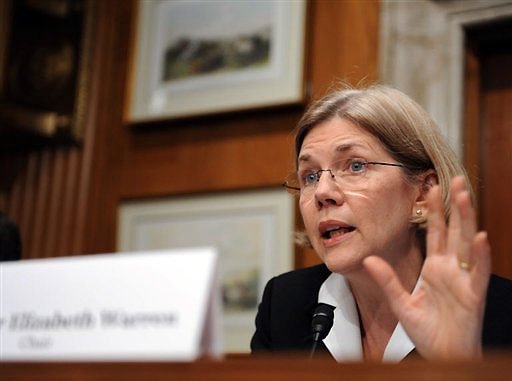
Elizabeth Warren

Beyoncé Knowles
Yes, all of these ladies know Houston well.
Annise Parker, our mayor, just passed a Hire Houston First plan to keep growing local jobs, while working to hold onto her own job in a second term on November 8th, effectively unopposed.
Elizabeth Warren, a UH grad and former UH law prof, just stepped away from the job she created at the Consumer Financial Protection Agency, to return to teaching business law at Harvard, while exploring the possibility of a Senate run in 2012, with a major citizens’ rights focus.
Famous for being—and singing about being—a hard working woman and wage earner (to “all the honeys making money!”), Beyoncé is now taking on the other side of “woman’s work,” as she goes about the business of bearing her share of the population, having her first child. And today (September 4th) just happens to be her birthday – the big 3-0.
Happy B’day, B!
Keep up the good work, ladies!
We’ve known for a while that women are turned away from academic careers in STEM fields (Science, Engineering, Technology and Math) at least in part because they fear that they’ll end up not having a family or being able to have fewer kids than they want.
A new report from Rice and SMU expands the research to men — and finds that men are also turned away from STEM academic careers out of fear that they’ll have too few kids, though the proportion is somewhat smaller.
(“Women [postdocs] are much less likely than men to report considering a tenure-track academic job at a research university [69.1% of women vs. 84.0% of men, p<0.0001, n = 472]. But both men and women are equally likely to report considering a career outside science entirely [for graduate students, 25.2% of men and 26.4% of women, p = 0.7379, n = 639; for postdoctoral fellows, 16.4% of men and 20.3 of women, p = 0.2790, n = 463]. [Per the study’s regression analyses, “having had fewer children than desired due to the science career is the only factor that predicts seeking a career outside science.”])
And among those (male and female) who are in these careers, the men who report having fewer kids than they wanted also report a HIGHER degree of overall dissatisfaction with their lives than do the women (male scientists average 1.5 kids, female scientists 1.2).
The report (by sociologists Elaine Howard Ecklund and Anne Lincoln) concludes that “universities would do well to re-evaluate how family friendly their policies are… and [for example] might leverage additional resources to help foster scientists’ work-family balance, such as providing on-site day care.”
And, some of us who’ve been there might add, making sure that care is available for all who want it (not just a few spots), that it’s not exorbitantly expensive, and that it can be part time for those with infants who don’t want to sign up for full time care but do want some. Too often when child care is available, it is not available on terms that families actually feel comfortable signing on for.
The take-away: if you want more scientists and engineers–male and female, you need to make the life style that goes with the work conducive to full-spectrum happiness. Presumably the same logic applies to all time-intensive fields where you want to attract workers.
Gosh, childcare. What an innovative idea. Good for families, good for employers, good for parents, good for kids, good for the national workforce. Are we nearing the point when there be enough women in policy-making roles to create the national system that we all know will benefit everyone? Maybe Kathleen Sebelius can just put a national system in place as a national health initiative (see below).
Last week’s report from the Institute of Medicine on what Clinical Preventive Services for Women should be funded through the Patient Protection and Affordable Care Act (aka the new federal Health Care Program) generated headlines for its recommendation (among many others) that birth control be made available to all fertile females for free.
In the context of contemporary fertility battles, this is bound to lead to argument. Should a citizen who doesn’t approve of birth control be understood to be funding the birth control of those who choose to use it — and therefore have a basis for objecting? Or should we understand that the many tax payments from those who approve of birth control for those who want it are those that are funding it, while the taxes of those who don’t approve of birth control are funding the costs associated with birthing and raising unplanned kids?
The IOM, a nonpartisan medical review board, finds that birth control is one among several key preventive measures (along with screens for disease and domestic violence) that would markedly improve the health of women. A future in which women’s health matters? The fact that it’s proposed at all suggests that we’ve already made progress toward that future. Debate will follow. And women will doubtless have much to say, as well as increasingly powerful voices with which to say it.
Update: The Secretary of Health and Human Services Kathleen Sebelius has issued new guidelines adopting the IOM recommendations.
The guidelines call for no cost to patients for such services as:
Well-woman visits
Gestational diabetes screening
HPV DNA testing
STI counseling, and HIV screening and counseling
Contraception and contraceptive counseling (yes, that’s free birth control)
Breastfeeding support, supplies, and counseling
Domestic violence screening
“The Affordable Care Act – the health insurance reform legislation passed by Congress and signed into law by President Obama on March 23, 2010 – helps make prevention affordable and accessible for all Americans by requiring health plans to cover preventive services and by eliminating cost sharing. Preventive services that have strong scientific evidence of their health benefits must be covered and plans can no longer charge a patient a copayment, coinsurance or deductible for these services when they are delivered by a network provider.”
[An earlier version of this post called the 2010 fertility an all-time low, based on figures originally published in the annual CDC reports. Revised figures published in 2003 (NVSR 54, no.2, p. 29) suggest that there’s still a way to go before the fertility rate reaches the updated all-time low, which was 63.6 in 1997. This post has been altered to reflect the updated figures.]
This week the CDC issued a provisional overview of birth data for 2010 – providing a chart indicating the continuing decline, apparently linked to the continuing current recession, as well as the earlier rise linked to the false sense of economic well being that preceded that recession, since 2005:
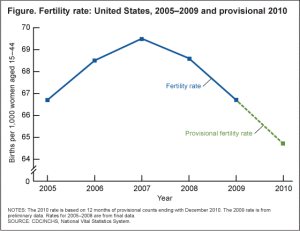
CDC chart based on 2005-2009 birth data and 2010 provisional data
The report was short, since it is provisional, including no details about the ages of the women involved in these births. The full preliminary report, with more details, will not be out for months. Final reports generally come out about a year after the preliminary data.
If the full reports confirm the provisional data, the 2010 US fertility rate (64.7 births per thousand women in the 15-44 age band) will have fallen below the recent low of 64.8 hit in 2002 – when we were also in recession. The years 1995-1999, characterized by economic boom, also had fertility rates under 64.7 (64.6, 64.1, 63.6, 64.3, 64.4, respectively).
You may recall that last year we had stories telling us that the BIRTH rate had fallen to an all time low – and I wrote a piece all about how the birth rate was not telling us that women were having kids at an all-time low level — it’s the fertility rate that tells us that. Instead the birth rate was going down in part because it tells you how many births there were per people in the whole population, and since people are living longer, and those old folks don’t have babies (or very few), there were fewer births per thousand.
The fertility rate was going down too in 2009 however – just not to record lows. And it’s still declining.
For a wider perspective, here’s a chart of the fertility rate from 1909-2009 – and you can add on the 2010 decline in your mind’s eye. (The Y [vertical] axis goes by 20s from 0 to 140.)
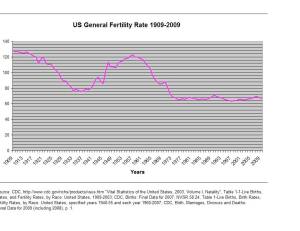
Births/thousand US women 15-44, 1909-2009
Carla Bruni, Penelope Cruz, Tina Fey, Mariah Carey… the later mom crowd keeps growing!
Here’s a link to my recent guest blog at Mothering in the Middle: The blog for new midlife mothers: Ladies in Waiting.